

Has Aging Become Taboo?
...Both to Witness and Experience


Feb 2026
I’m sure you’ve seen it.
Jim Carrey is making the news rounds this week after appearing at the César Awards in Paris. Afterwards, his presence was highlighted not for being an honored recipient of the prestigious award, but for some notable changes to his face.
Cue the harshly lit side-by-side comparisons, the clone conspiracies, and the debate on the causes.
My question is: What do we expect a 64-year-old man to look like?
More importantly, how do we expect people to respond to aging when every version of it is criticized?
Are we so conditioned by constant scrolling past filtered skin, perfectly curated lighting, and accessibility to treatments and surgeries that seeing a face change over time feels almost inconceivable? Could a star many of us grew up watching -gasp!- actually age with us?

While I have to suppress my glee that a man is at the center of this chatter for once, it does highlight the no-win situation we’ve created around aging.
Too much intervention, early intervention, or accepting the inevitable- somehow, each choice is deemed the incorrect one.
Filler: Rejuvenation or Ruin?
The reality is, we all age. Even celebrities. So, when Jim Carrey shows up looking less like he did even 10 years ago, it shouldn’t be a shock. The issue that often arises, though, is how people try to counter the signs of old age.
I’ve noticed over time that we’ve turned filler into the go-to solution. The moment a face starts to shift and sag, like a house settling, we rush to make repairs, urgently filling in lines and hollowing with injectable volume to replace what time has quietly taken.
Adding volume is easy. Sometimes a little too easy.

Restoring fat loss and filling in deeper lines, while maintaining the natural contour of your face, requires significant precision and a highly skilled professional with an understanding of facial anatomy and a filler’s composition.
Products will have differences in texture and density, making some appropriate for certain areas of the face. They’re very much not a one-size-fits-all solution that can be applied to any area lacking volume.
It’s also important to keep in mind when a temporary filler will hurt more than help, and other treatments should be pursued (more on that later…)
What causes distortion?
Ironically, filler isn’t what distorts the face. Poorly placed filler, lack of restraint, and repeated treatments can and will create this problem over time.
Aside from the much more serious risks that come along with any medical procedure, dermal fillers can cause some more common side effects like migration, hardening, and potentially worsen facial sagging (though that’s heavily debated).
There’s also the fun fact that filler doesn’t necessarily always break down on its own…

…it can remain in the body for as long as five years, with at least one case of detection after 10.
When filler is injected, there’s a healing response along that pathway. Each injection introduces minor internal scarring, and with frequent visits, that scar tissue can accumulate.
This can interfere with lymphatic drainage (aka causing fluid retention) and overall contribute to the overly-smoothed, puffy, “pillow face” effect that people instinctively react to.
Hasn’t this been the case with many celebrities? We notice and comment on their reasonably aging faces. They disappear and come back with plump, filled-in features, and then we mock the overcorrection.
So what, exactly, is the acceptable version of aging?
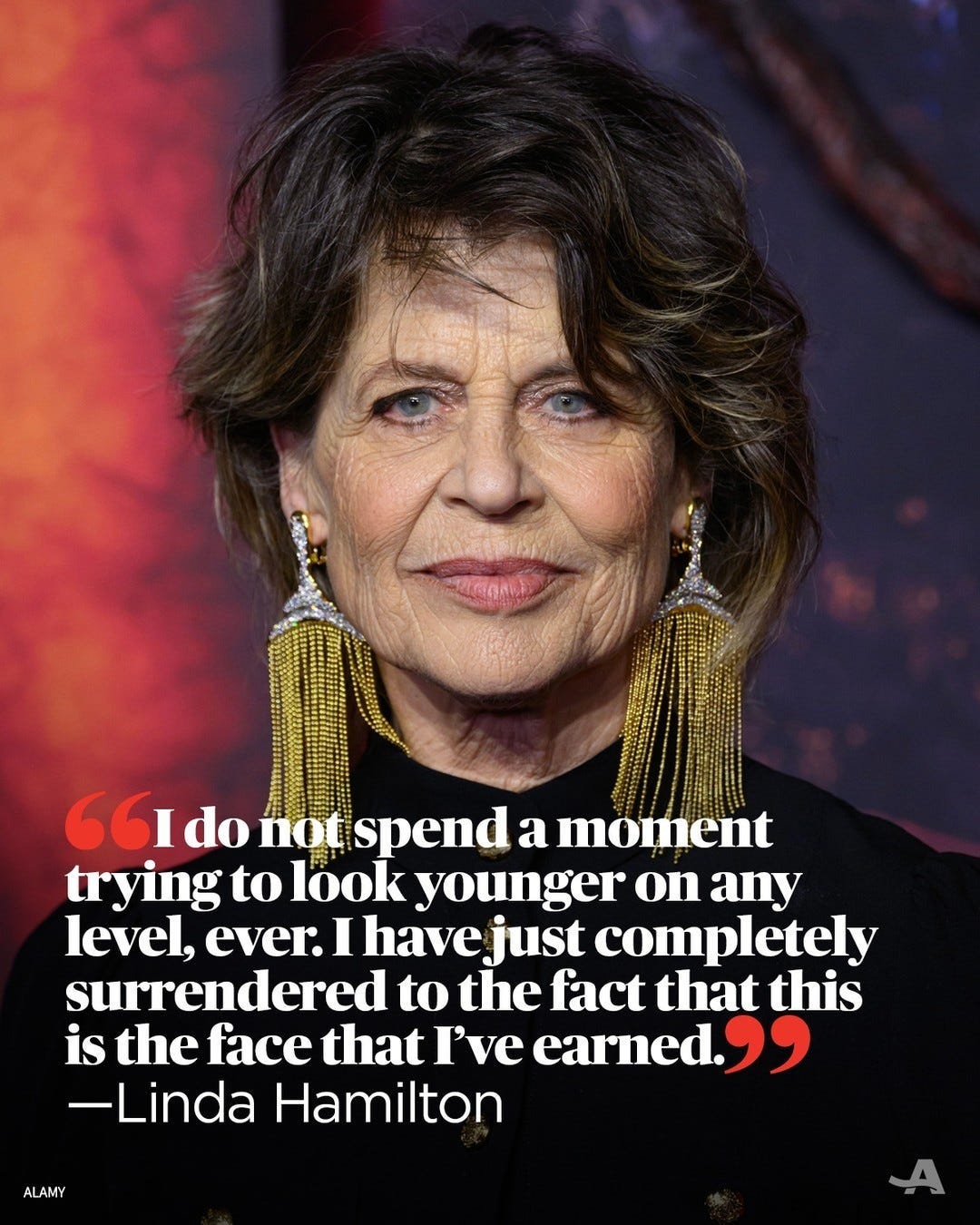
The answer will change from person to person, so it’s really a matter of knowing what your acceptable version is. Are you a Linda Hamilton, or are you deathly afraid of even looking your age?
If it’s the latter, you have options that won’t put you in the judgmental spotlight of public opinion like Mr. Carrey. As previously mentioned, there are other treatments besides filler if it doesn’t appeal to you or you worry about “pillow face.”
Skincare
There is no one miracle product, but consistently taking care of your skin, protecting yourself from the sun, and maintaining your barrier is always the foundation.
Invest in products that are attuned to your skin type and overall skin concerns. I can assist with ordering products with my online skincare analysis.
Biostimulators
Quickly gaining popularity, injectable biostimulators are an excellent option for those with a little patience and looking for a more gradual result. They work by triggering your body’s own natural collagen, hyaluronic acid, and elastin fiber production over the course of months.
Like traditional temporary fillers, they restore volume and smooth lines, but will also address some minor skin laxity.
You won’t walk out looking immediately refreshed, but changes unfold over three to six months, depending on your individual treatment plan.
Laser Treatments
Ablative lasers (including CO2 and Er:YAG) vaporize the top layers of the skin to reveal a new layer of healthy skin and stimulate the production of collagen. Healing and results can be quite significant. CO2 will provide the most dramatic “after”, greatly improving any texture, lines, or sun damage,
Non-ablative lasers use heat and/or light without destroying the top layers of the skin. These include Pulsed Dye and Nd:YAG. Results are more gradual, less dramatic, and healing is not as intense. Great for fine lines and milder wrinkles, along with sun spots.
Non-laser, simpler treatments worth considering include IPL and Red Light Therapy.
Aging is not a race to outrun lines or a contest of who looks the most untouched. It’s a natural part of human evolution. You can submit to it and bask in your natural beauty, or, just like Jim Carrey, take the steps to address the deflated hollowness that can occur as we age.
Just know that, regardless of whether you approach gracefully with a healthy skincare routine or turn to fillers, you’re going to draw the ire of others.